Last week, we laid out The Futures We Believe In. Future #1 was stated plainly: a world where the enterprise can both hire and manage any digital specialist while maintaining visibility and control across AI agents and their outputs.
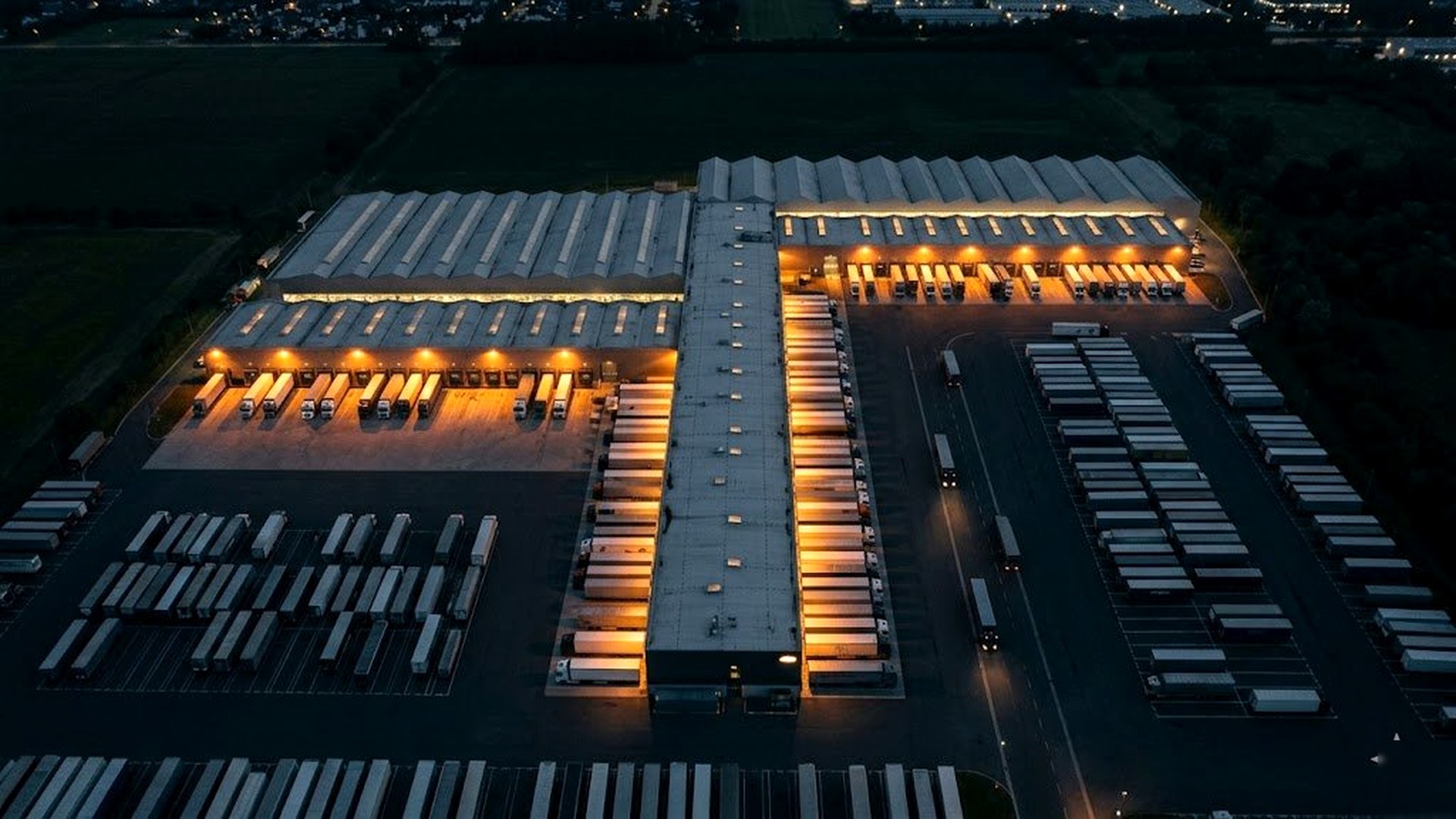
The clearest illustration is already running at a freight network out of Los Angeles.
WARP: logistics, the most analog industry imaginable
WARP is a middle-mile logistics network. Bee Partners was their first investor in 2022; they recently closed a large Series A, and have already eclipsed $10M revenue run rate. Their network handles freight routing, pricing, scheduling, and real-time visibility across dozens of cross-docks and thousands of carrier vehicles.
In describing the round, the founders used language Bee rarely hears from a logistics company: “This round isn’t about growing a team. It is about multiplying output.” Daniel Sokolovsky, CEO and co-founder, put it more directly: “We are scaling with intelligent agents that make our amazing people a thousand times more productive.”
What WARP has done is unusual for a freight company: it has hired agents in place of headcount. Troy Lester, co-founder and CRO, frames the customer side of it: “Shippers don’t want freight. They want outcomes, guaranteed every time.”
That framing is instructive. When your agents handle routing, pricing, and customer service, the human organization stops selling freight and starts guaranteeing outcomes. The product changes because the workforce changed.
If this is happening at a cross-dock operator in 2025, it is coming everywhere.
The lifecycle every enterprise will need to walk
WARP compresses what will take most enterprises several years into one observable sequence. Most enterprises today have no idea where to start. The C-suite reads market reports and hires consultants; middle managers run pilots; nothing converges. The AI strategy is whatever the most recent vendor demo was. Nobody has a framework that maps the company’s actual work onto what agents can do today, by industry, at scale.
That is the first gap. Before an enterprise can hire agents, it has to know which ones to hire and where they fit.
Superintelligent is building the planning infrastructure for that question. Founder and CEO Nathaniel Whittemore hosts The AI Daily Brief, the most-listened-to AI podcast among enterprise executives. He has been answering “what should we do about agents” on air every weekday for over a year. Superintelligent productizes that knowledge: the platform deploys voice agents at scale, interviews hundreds of employees simultaneously, and maps the output against a database of validated AI use cases by industry. The result is an executable strategy.
Once an enterprise knows which agents it needs, it still has to fill the roles. Generic AI assistants do not work here. The job is specialist work, and the specialist has to be purpose-built for the job.
Orita is a useful illustration. The founders describe it as an AI-driven email, SMS, and direct mail optimization platform for e-commerce brands. What it actually does: build a custom machine learning model for each brand, identify high-intent recipients, suppress disengaged and bot profiles, and optimize send timing, daily, with no human in the loop per send. The platform makes autonomous decisions about who to reach and when. That is a hired specialist. The enterprise does not have to teach it the job; it does the job.
Hiring is the easier half. Managing is where most enterprises break. Today they are running their first or second agent in production, and the pattern is familiar: a human reviews outputs, catches drift, intervenes when something goes sideways. That model breaks at scale. A hundred agents making thousands of decisions a day cannot be reviewed by a human team. Drift compounds quietly. Compliance failures surface only after they have shipped. The audit trail that would let an enterprise unwind a bad agent decision does not exist by default; it has to be built.
Wayfound launched in April 2024 as what it calls the world’s first no-code AI agent management and supervision platform. It monitors agents for guardrail compliance, user sentiment, knowledge gaps, and tool call effectiveness. In June 2025, Wayfound announced a partnership with Salesforce Agentforce, providing a single-pane unified visibility layer for all agents, built on MCP and OpenTelemetry.
Tatyana Mamut, CEO and co-founder, came from IDEO, Salesforce, Nextdoor, Pendo, and AWS. She is the rare operator who has run consumer product, enterprise product, and AI research; she sees the management problem from all three angles.
The deployment data is the load-bearing number: 80% less testing time, 75% faster deployment. Speed makes the lifecycle practical at enterprise scale.
The readiness gap
The sequencing above is what the enterprise lifecycle looks like in theory. In practice, 2025 and 2026 are the years where that lifecycle is being built faster than enterprises can absorb it.
Agent capabilities are expanding faster than enterprise governance. New agent frameworks ship monthly. The audit trail, the oversight model, the chain of accountability when an agent makes a consequential decision: those are still being figured out. The management layer is necessary infrastructure, and it does not yet exist at scale.
This is why Bee invested in the management layer before the market was ready to receive it. Wayfound, Superintelligent, Orita, and WARP are 2024 and 2025 companies, building the plumbing that 2027 will run on.
When enterprises become ready, they will buy the management layer from the companies that have been solving the problem in production for the past year and a half.
Humans stay in the loop. The loop is the operation of the software that manages the work; the work itself runs autonomously. The enterprise becomes differently supervised when it goes agentic. The oversight moves up the stack, from individual tasks to the platform governing those tasks.
That is Future #1.