Every product category that matters in aerospace, defense, energy, and infrastructure eventually runs into the same wall: the properties of matter itself.
Heat resistance, weight, durability, radiation tolerance. These are not engineering preferences; they are hard constraints. For decades, the assumption was that these constraints defined what could be built, full stop. If the material could not survive the environment, the product did not exist. If the supply chain for that material ran through a foreign adversary, the risk was accepted as structural.
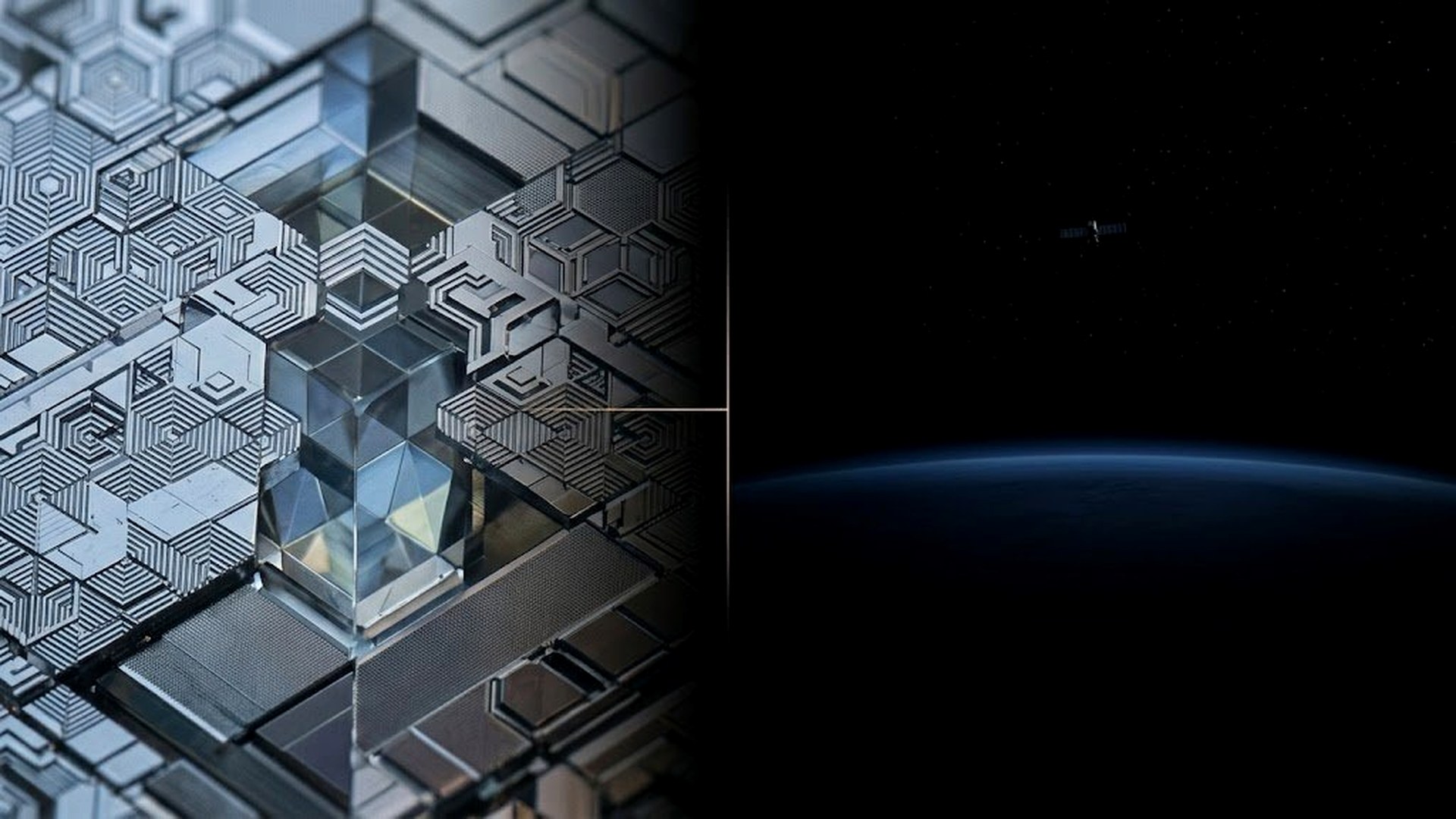
That assumption is now being tested from two directions at once. One company is using AI-powered computational discovery to find and create the materials that extreme environments require. Another is building off-world manufacturing infrastructure to reach the purity levels that Earth’s physics simply will not allow. Together, they describe a future Bee Partners started building toward before the market had a name for it: a future where the boundary of what matter can do is not a fixed constraint on product design.
N-ERGY: discovering the materials that critical industries need
The material requirements for defense, aerospace, and nuclear applications are not marginal specifications. A radiation-tolerant component that fails under the conditions it was designed for has a different failure mode than a software bug. The consequences are catastrophic and irreversible. This is why R&D-intensive enterprises in these sectors run development timelines measured in years, sometimes decades, and why the bottleneck has historically been the discovery process itself: identifying, characterizing, and validating the right material for a given extreme environment.
N-ERGY, co-founded by Dr. Madhumitha Ravichandran and Vinay Ramesh, is compressing that timeline. Dr. Ravichandran holds a PhD in Nuclear Reactor Engineering from MIT and built the technical foundation of the platform from her doctoral research. The platform runs computational intelligence to accelerate materials discovery: what used to take decades of laboratory iteration can now be modeled and validated in weeks. The system runs on-premises inside the customer, so proprietary IP stays inside the customer’s environment.
The end markets are the ones where materials constraints are most acute: defense, aerospace, nuclear, semiconductors, energy. Customers include national laboratories and industrial R&D programs with development timelines long enough that compressing the materials-discovery phase by even a fraction delivers substantial value.
There is also a supply chain dimension. China controls a dominant share of global rare earth and critical mineral supply and has moved to restrict exports. For customers in defense and semiconductor manufacturing, dependence on a single geopolitical source for critical inputs is a structural vulnerability. A domestic computational path to critical materials changes that calculus. N-ERGY is operating at an intersection that would matter on its own; the geopolitical tailwind accelerates the urgency.
Bee invested because Dr. Ravichandran and Vinay Ramesh saw the materials-discovery bottleneck clearly and built a platform that addresses it at the right layer: the computational layer, where speed is possible, and the customer’s environment, where trust is essential.
Besxar: manufacturing above the atmosphere
The semiconductor supply chain has a physics problem. Chips for AI compute are running hotter, faster, and denser than the materials standard silicon can reliably support. Terrestrial fabs have reached practical limits on cooling systems and power density. The ultra-high purity substrates that next-generation chips require are constrained by the particulate contamination and atmospheric conditions that are simply present on Earth.
Space solves this. The ultra-high vacuum of low-Earth orbit creates manufacturing conditions that terrestrial cleanrooms cannot replicate: 30% higher yields, 100 times fewer defects per wafer. For gallium-nitride in particular, a substrate material with no good terrestrial alternative for high-power, radiation-tolerant applications, space manufacturing is not a long-term vision. It is the only viable path to the quality levels the market needs.
Besxar, founded by Ashley Pilipiszyn, is building the infrastructure to manufacture there. Pilipiszyn was OpenAI’s first Technical Director to the CTO and was present for the launches of GPT-3, DALL-E, and Codex. Before OpenAI, she led the Grid Resilience and Intelligence Platform at SLAC National Accelerator Lab. She is, in the clearest sense, someone who has lived at the intersection of frontier computation and critical infrastructure.
Besxar’s product is the Fabship: a reusable autonomous manufacturing pod designed for ultra-high-purity substrates, modular, and agnostic to space transport provider. The company’s first-product wedge is two-inch gallium-nitride wafers. Native GaN wafers have no terrestrial substitute at the quality level that defense applications require; defects are the binding constraint on yield and device lifetime. The supply chain for this material is geographically concentrated in Japan, creating the same kind of geopolitical fragility that characterizes rare earths. A domestic, US-based production path is mission-critical for the defense applications this material enables.
The government has recognized the bet. Besxar received an early Navy Phase I award. The commercial path runs through Falcon 9 manifests, with Fabship payloads designed to fly monthly. Bee invested before there was a press release, because the physics case and the founder were both clear.
Two companies, one frontier
N-ERGY and Besxar are working on distinct problems in different media: one on Earth, one above it. What they share is the underlying claim: that the materials constraints which have historically defined what products could exist are not permanent. They are addressable, through computation on one end and through orbital manufacturing on the other. They also sit upstream of Future #3: before hardware can be designed and manufactured on AI’s cadence, the materials it is made of have to exist.
Bee invested in both before the market had organized this as a category. The pattern is consistent: we find founders who see a constraint the market treats as fixed, and who have the technical credibility to address it. N-ERGY and Besxar had both.
That is Future #4.